Showing posts with label Theories. Show all posts

Tuesday, July 8, 2008

I Need to Make Sure No Agents Knock on My Door

On July 5, 2008, at 2:03:52am, I received a message on my cell phone. Sender? No name. Sender's phone number? "3729". The message? As follows:
jmagok@jillfeinbaker.com / / just take a look at this smallcap
Symbol-chgy, China Energy Corp
Hand off

After some searching...

JillFeinBaker.com - Jill FeinBaker is a licensed clinical social worker in Skokie, Illonois.

jmagok@jillfeinbaker.com - No hits, recomends "jmagick@jillfeinbaker.com" instead. Still, no hits. Why don't I ask Jill herself, you say? Well, Mr. Smartypants, I actually did that. Her response: "I am sorry, that address is not affiliated with me." However, I don't believe it's a completely bogus email, because I actually sent a message to it, and though I received no response, I also didn't receive a Mailer Daemon response.

jmagok - By itself, the only hit seems to be a misprint in some book written in God-knows-what.

smallcap - Either referring to a typography type or a company which has less than $2 billion of market capitalization. My guess is it's the latter.

chgy - A legitimate stock symbol.

China Energy Corp - The name is pretty self-explanantory. I looked up CEC to see if there were any recent news articles relating to it, and found one. The article is an investment one which suggests that oil prices will continue to rise, and any speculators calling their stocks now are mistaken.

Hand off - This one really gets me. We all know what "hand off" means, but in what context? Perhaps it has to with cellular communications...(I'll admit, most of that article went over my head)...or perhaps it has to do with a stock handoff...though I don't entirely know what that entails...


Now, I was thinking back to the number that sent the message to me...3729. Could it mean something more? So, I downloaded this numbers-to-words program. In the end, I ended up with 81 different jumbles of letters, the only two words being "draw" and "fray". But the rest, they looked so much like...stock symbols?

Hence, I took all those 4-letter messes and pasted them into Google Finance. I found that some were indeed ticker symbols.
DRAX - "Drax Group plc is a United Kingdom-based company that is principally engaged in the power generation business operating in the commodity markets of power, coal, biomass and carbon." (!!!)
DRAY - "DrayTek Corporation is a provider of network security, remote access and voice over Internet protocol (VoIP) solutions for residentials and small and medium-sized enterprises."
DSCY - Discovery Oil Ltd. (!!!)
EPAX - "Ambassadors Group, Inc. (Ambassadors) is an educational travel company that organizes and promotes international and domestic programs for students, athletes and professionals."
EPAY - "Bottomline Technologies (de), Inc. is engaged in providing electronic payment and invoice solutions to corporations, financial institutions and banks around the world."
ERCX - E.R.C. Energy (!!!)
FRBW - "Frederick Brewing Co. is a specialty brewer that brews, kegs and bottles at its brewery in Frederick, Maryland, for wholesale to its 140 independent distributors, more than 20 styles of flavored beers under the brand names of Blue Ridge, Wild Goose and Brimstone."

Three energy-related companies! Now we're getting somewhere. The latter two are small potatoes (in fact, Discovery Oil Ltd.'s company profile on BusinessWeek says "Discovery Oil, Ltd. does not have significant operations."), but Drax seems to be on its feet, with a stock price of over $760 (or are they pounds?).

In fact, according to some news articles, it looks like Drax is growing, and is even thinking of expanding.

!!!

I think I may have figured it out. Now, bear with me...

In order to extend Drax Group's growth, China Energy Corp will "hand off" much of its stock to the British company. Being a smallcap company, they can more easily do this, and by doing this, their stock price will increase dramatically! This J. Magok, even if they're not associated with Jill FeinBaker, is one of the few people who are willing to go and put this information out there.

What does this mean for me?

It means...it means...it means I sure know how to waste an afternoon.

Thursday, April 26, 2007

Mini-Blogs, Set Four

John Williams Can Even Give it its Own Theme Song
I've created a new Olympic sport for the more mentally gifted folks amongst us. It's called Thought Put. If you can't tell by the pretty blatant portmanteau, it's a form of Shot Put that harnesses telekinetic powers as opposed to muscles. The rules are pretty similar. You have a small, 8 pound metal ball that you have to throw as far as possible. However, instead of having to put, er, place the shot (the ball) on your neck while twirling around like Mikhail Baryshnikov, you simply lift the shot from the ground and throw it...with your mind.

Now, I recieved the second place medal for Shot Put in the prestigious Mt. SAC track and field tournament. I didn't earn it, mind you, but I still received it, and it's the highlight of my short-lived career. The point is, I consider myself one of the foremost authorities on the sport. And I can assure you that Thought Put would garner at least 40% more views on television than the current incarnation gets. Plus, it will expose all the people with the gift, and they can then become our protectors.


Protecting Our Future
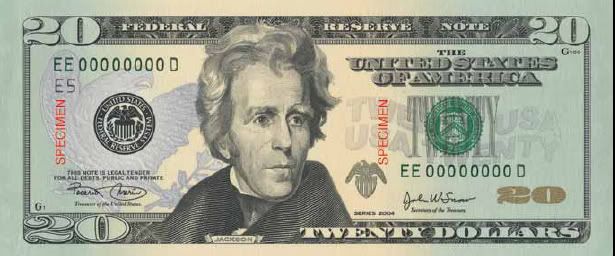
You know, I was thinking about why they keep changing the look of paper currency. Then I suddenly came to a realization. How many times have you heard someone talk about what their plans would be if they suddenly had the ability to travel through time (the conversation comes up more often than you'd think betwixt my associates and me)? A lot of times, what they say is that they'd go back in time, invest a lot of their money, then travel back to the present, when they'd be rich as Nazis. Although I've never seen the movie to any substantial effect, I'm aware this is similar to the plot of Back to the Future II. And that movie shows that the result of such a situation is a dystopian future/alternate present, which most people would agree isn't good.

Enter the US Treasury. Henry Paulson sits down with his staff and talks about this potential disaster. They determine that the only way such a bleak existence can be avoided is by changing the look of money. Why? Consider the following: if you went back to 1975 to invest in Microsoft, you'd need to take lots of money in order to make it big. However, your money in the bank won't travel with you. You're going to need cash for your journey through the years. But what if you went to a stock broker and tried to funnel in a bunch of bills that look like this:

The broker is either going to think that you're either the worst counterfeiter ever, or just plain crazy. You won't even get the opportunity to invest, since nobody will take your "future money" seriously. And Henry Paulson smiles knowingly. Crisis averted.

(Of course, there is always the possibility that you use all your money to buy gold bullion, which will definitely be accepted. However, exchange rates are probably going to lessen your profits, and let's be honest, you'll probably be mugged and robbed before you get to the stock broker.)


Spelling Woes
I swear, I don't think I've ever spelled the word "receive" correctly. Ever. Including just then. And I was consciously trying to spell it correctly, too. Damn "c". Well, thank God for slepl czechers.


I Was Actually Somewhat Serious When I Wrote This
The people who wear the giant character suits at amusement parks...they lead an interesting life. They appear in thousands of photographs for hundreds of families, spread accross the country and the world. They are in pictures with the very young and the very old. They may appear in a picture which remains in a scrapbook for fifty years. And yet...nobody will ever know who they are.

Does anyone ever ask the people in the character costumes how they're doing? No, I don't mean, "Hey, Pluto, how's it going?" I mean, really asking the person how they're doing. I don't think so. Usually, if they speak to the person, they're saying something along the lines of, "Is this what you were hoping you'd do with your life?" (I sometimes think that when I see the guy dressed as the giant Quizno's cup.)

But the next time I go to Disneyland, I think I'm going to go up to the guy in the Mickey costume and say to him something similar to the following:

"You are such an integral part of this place. You are an integral part of the experience for the people who come here. You are one of the primary factors of the smiles that cross the children's faces, but you are anonymous. You make people happy, but they don't know you. Will they ever? Will they ever look at their albums and reminisce, 'Oh, I was so happy when this picture was taken. God bless the person in that suit. They are willing to selflessly bring the happiness to others, with no expectations of reciprocation. After all, how could I ever pay them back if I'll never know them.' Altruism at its finest. You, my friend, are a good person. God bless you, sir or madam."

Thursday, March 29, 2007

Now for something a little Risqué...

As I stated in my previous post, I had a couple of friends stay over at my place for a couple days. I was expected to do some basic things with them: go out to lunch, show them around campus, watch a movie or two, etc.

So imagine my surprise when they ask me if I have a copy of Risk with me.

As it turns out, I did. I only keep one board game in my current room at all times, and that game is Risk. It is, without doubt, my favorite board game of all time. And so when someone comes over to my home and asks me to play...well, my eyes light up a little bit, I can tell you that.

And now, a few tidbits on Risk.

---

They say that a favorite board game can say a lot about a person....Actually, no one has ever said that (at least, not as far as Google can tell me), but I certainly believe it to be true, at least to an extent. Now, keep in mind that I don't feel that someone who loves Sorry is inherently apologetic. But, considering that Risk is my favorite board game with Monopoly coming in second, I can spot a few common themes:
-Long, drawn-out games.
-Ruling over others (financially or territorially).

It's the second one that I feel is key. You see, when since I was young, I have had megalomaniacal tendencies. Remember how I mentioned that I am a monarchist? Well, in the perfect monarchy, I am king. Perhaps being hooked on Pinky & the Brain didn't help. Neither did the "Hail Andrew!" salute instated in middle school by my peers. And, yeah, being called "God" in high school just exacerbated the situation. The point is, I want to rule over you. Risk provides me with the euphoria of conquest without the blood-stained clothing and war-crimes.

---

When I play Risk, I play Risk. I like to say that I am one of the best Risk players I know. People often comment on how I will stare at a board for minutes at a time, contemplating whether or not I should weaken my defenses in Ukraine so that I can overtake Ural.

However, my strategy is different than most players. You see, most players play to win. I, on the other hand, play to ensure that another player loses. At the beginning of a game, I will usually pick a player at random (though I do have favored targets) and then make it my mission to clear the map of all their troops. At that point, a new player will be chosen at random, and the process continued.

And yet, for some reason, I often (not always, but often) end up winning anyway. It may be luck, but I like to think that it has to do with my focused game play, intelligent attacks, knowing when not to attack, and knowing how not to be attacked. Put together, these allow me to not only accomplish my initial goal, but to accomplish my secondary, tertiary, and (ultimately) final goals leading to victory.

---

There are a few basic play styles and strategies in Risk:
1. The Blitzkrieg General: Try to expand and attack as quickly as possible along a single path, usually leaving your backside vulnerable, but giving you a large boost in reinforcements while depriving others of the same.
2. The Brooder: Do not attack for the first couple turns, favoring instead to build up armies in one or a few contiguous territories.
3. The Leonidas (Formerly called the "Whim-and-a-Prayer Player"): Attacking with everything, all the time. Even in the face of overwhelming odds, they will attack, hoping that the dice rolls are in their favor.
4. The Diplomat: The category I fall into. As the name implies, this relies heavily on diplomacy and keeping in close communications with your enemies companions. There are a few subcategories of this:
a) The Bargainer: "All I want is Siam. Give me Siam, and I'll let you have all of South America."
b) The Threatener: "You will stay away from my territories, or I will personally end your reign in Asia."
c) The Peacenik: "If you don't attack me for the next three turns, I won't attack you either."
d) The Deceiver: "Don't worry, if you move you troops away from Alaska, I promise I won't attack (heeheehee)."
e) The Ally: "We can help each other, you and I. Working together, we can destroy our friend over there.

I have elements of all of these subcategories except for The Deceiver. I am quite sure that in all the years I've played, I have never put-and-out stabbed anyone in the back. It's just bad policy that may work once, but as George W. Bush says, "Fool me once, shame on—shame on you. Fool me—you can't get fooled again."

---

I have a primary Risk group that I like to play with during vacations in Southern California; myself and three others. I personally four is the minimum number of players in order to enjoy a game to its fullest. We are all Diplomats, and it shows. At least three times on any one turn, one of us will point to another. They will then bring that player to another room to discuss the game and strategies and politics, as will the two remaining at the board. We tend to speak in very hushed voices, giving it a real feel of a cloak-and-dagger political movie.

When I talk to the others in these correspondences, I tend to speak in absolutes. "I can tell you now, attack him in the Western United States this turn. If you don't, he will come back and destroy you in all of your Canadian territories and weaken your position overall." I probably wouldn't speak with such authority if I didn't turn out to be right about 95% of the time. However, people are always distrustful, and so they won't always take my advice. I can't help but feel vindicated when my soothsaying proves correct.

Often, though, the games in this group end up in little teams forming. Such is the case when two of the players happen to be dating. This gives their bargaining process a little something extra. After all, they can offer each other things I can't - and won't - attempt.

---

I even have created a principle based on Risk. It's been dubbed "The Madagascar Syndrome." The basis behind this has come from the many games I've played with my normal group. In it, we noticed something very peculiar. When there were multiple troops on the African island of Madagascar, they would all fall, with relatively little difficulty. However, if there was but a single troop on Madagascar, that troop would win an abnormally high number of battles. What's so special about Madagascar? Who knows, but it must be a nice place, for that troop to fight so hard for it. Hence, when any one troop on a territory wins more battles than the odds would predict, it is a case of the Madagascar Syndrome.

Now, I use the term "Madagascar Syndrome" in common usage. It's actually a very relevant term in gaming. I've noticed time and time again in Wii Boxing that I can beat down an opponent to their final health bar with relative ease, but goddammit, I can't finish them off before the bell rings. Have you ever played a fighting game in which you've beaten an opponent down to a tiny fraction of their life with little to no problem, but they come back and kill you before losing any more of that fraction? Congratulations, you're a victim of the Madagascar Syndrome.

Personally, one of the reasons I enjoy the concept of the Madagascar Syndrome (other than the fact that I created it) is that it just sounds good. "Madagascar Syndrome"...ahhh. I've made a promise to myself that I will write a book using it as the title. Here's a mock-up cover, even:

Keep in mind, I have no idea what the story would be, or how it would relate to the Madagascar Syndrome, but it will be good.

---

In closing, Risk is cool!

Wednesday, March 21, 2007

The Smell of Success

Me: "You know how tonight they're celebrating the Persian New Year?"
Co-Worker: "Yeah. Why?"
Me: "I'm tempted - really tempted - to go to dinner dressed as a Spartan."
Co-Worker: "I'm not sure how many people will get it."
Me: "Even if they don't, there's nothing wrong with a little esotericism now and then."
Co-Worker: "Do you even have a Spartan costume?"
Me: "Who needs a costume? All you need is a pair of underwear, a red cloth, and a six-pack. And I have two out of three."


And now onto our feature presentation...


Some of you may remember the story that male sweat arouses women's sexual drive. Yes, I realize that I am 42 days late in reporting this, but then, I guess it's a good thing I'm not a professional journalist.

Me: "And in our continuing coverage on Decision '08, it appears as though Dwayne Johnson is ahead in the exit polls. And now to Sarah with the weather."
Sarah: "Andrew, it's February 10th. President Hogan has been in office for 3 weeks now."
Me: ".....I...have to go now."

In case you're too lazy to click that link a paragraph back, I'll just run it down. Basically, there's a chemical in male sweat which, when sniffed, created several changes in (heterosexual) females, including improved mood, some physiological changes, and "significantly higher sexual arousal."

Why do I bring this up? Well sir, a thought occurred to me today, somewhat out of the blue:

What about the sweaty fat man?

I'm talking about those large, unpopular kids from high school, the John Goodmans and Wayne Knights who weren't blessed to be born with talent. Have you seen one try to climb a set of stairs? When I walk to campus, the armpits of my shirt always end up darker, but at least the sweat is relegated to that space. But the sweaty fat man, his entire shirt becomes three shades darker, covered in this salty aphrodisiac.

By scientific assumption, shouldn't a sweaty fat man have legions of chicks hanging onto his rolls of flab? Why, when the sweaty fat man exhaustedly enters into a class he rushed to in order to be on time, does he not make the women swoon? Why does the sweaty fat man never get a break?

I'll tell you why!

It's because the ladies are all looking the wrong way. Yes, they are looking away from the sweaty fat man when they become aroused from his odors. But with such a powerful pheromone, how can the sweaty fat man be ignored? It's all due to attractive males, or as I call them, "eye candy." I refer you to the following diagram:


As you can see, the following occurs:
-Female sees attractive male, and stares at him.
-Sweaty fat man enters, covered in arousing sweat.
-A slight breeze catches sweaty fat man stink and whisks it into female's nose.
-Female becomes sexually aroused.
-Female assumes that arousal stems from the appearance of the attractive male.
-Female declares love for attractive male, with all associated benefits.
-Sweaty fat man loses to eye candy. Again.

So, that's my theory. In conclusion, if you are a piece of eye candy, consider this: any woman who you've ever been associated with, you've usurped! If it wasn't for the sweaty fat man, you'd never get the ladies. You would just be another dry, womanless nobody. So give respect to the sweaty fat man, the true king of romance.


Number of times the term "sweaty fat man" was used in this post: 13.

Monday, February 12, 2007

One Fish, Two Fish, Red Fish...BLUE Fish???

One thing that sometimes bugs me is perception. How people can see the world two different ways, and yet still see the same thing. To use a more specific example, let's look at color. (I warn you upfront, this post will become quite convoluted, probably due to the very nature of the material.) Consider the following block; what color is it?


It's red, of course. I see it and know it's red. You see it and know it's red. This color is universally red. (For purposes of my argument, colorblind people don't exist. Sorry, pals.) However, what if red is not universally this color?

Confused yet?

What I mean is, what if the color I see as red is not the same one you see as red. What if the photo-receptors in our eyes, while processing the same information, feed different colors to our brain and present them as red. What if, the color you see as red, from my perspective, looks like this:


"Don't be silly, Andrew; that's green." Yes, it is. But what if someone's internal vision say this as red? And they always knew of it as red?

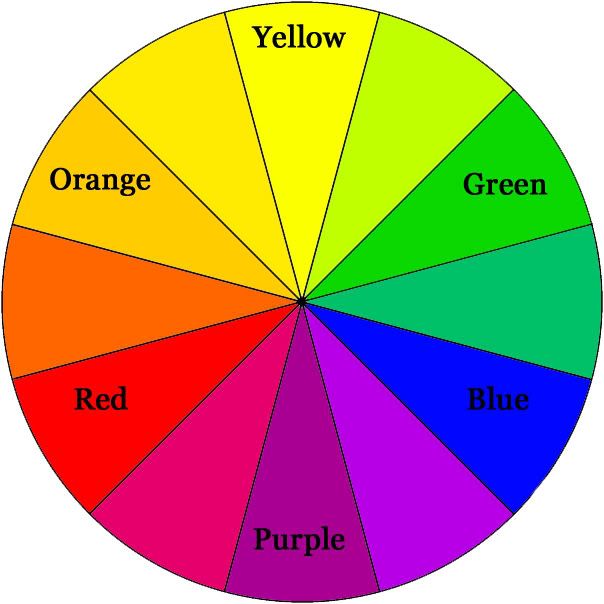
To better illustrate, take these two color wheels (click on them for larger versions). One is the normal color wheel that you're used to. The other is the color wheel someone else sees according to your perspective.


How can such a phenomenon be possible? Well, here's a challenge I propose to you. Describe a color.
Pretend there is a blind child that wants to know what the color red is. Describe it.

...

A-ha! You see my point? It is a nigh-impossible task, because everything we know about color is through experience and reference, not empirical information. If you want to have a person understand the color yellow, you show them a banana or a lemon. Person A may see the yellow on the left. Person B may see the yellow on the right. Each one sees yellow, and in each one's perspective, the other person sees purple and calls it yellow.

I hope that didn't thoroughly trounce your mind. To be perfectly honest, if my theory is true, then so are two other things: 1) It would be difficult to prove. 2) It makes little difference in the world. Let's look at both of these.

First, how would one go about proving that my idea isn't just something I wrote to hear myself type for a while? I have only one possible solution, and I'll readily admit it's more science fiction than science fact. The only place that people see different colors (perspective-wise) is in the mind. Hence, if you could hook some diodes directly onto someone's brain, making a visualization of their thoughts, and their sight, you could see colors the way they see them. How you would do this, I'll leave up to someone who actually knows about science.

Secondly, if my great theory is true...so what? What difference will it make in the world? None, I suppose. Regardless of how people see their individual colors, they will stop at red and go at green (if they're a good citizen, of course). People have gone on well enough for millennia without knowing how each other exactly sees colors, so I think things will go on some more.

It's just interesting to think about. It's like talking about general relativity. A person's perspective alters not only what appears to happen, but what actually happens. Like they say, perception is reality.

Hmm...maybe I should have gotten more sleep last night.